Swap Sudoku.
Swap two numbers. Bring the board back into balance.
Independent developer · Product & interaction / Visual design / Development & release

Swap Sudoku · Game promotional artwork
Overview
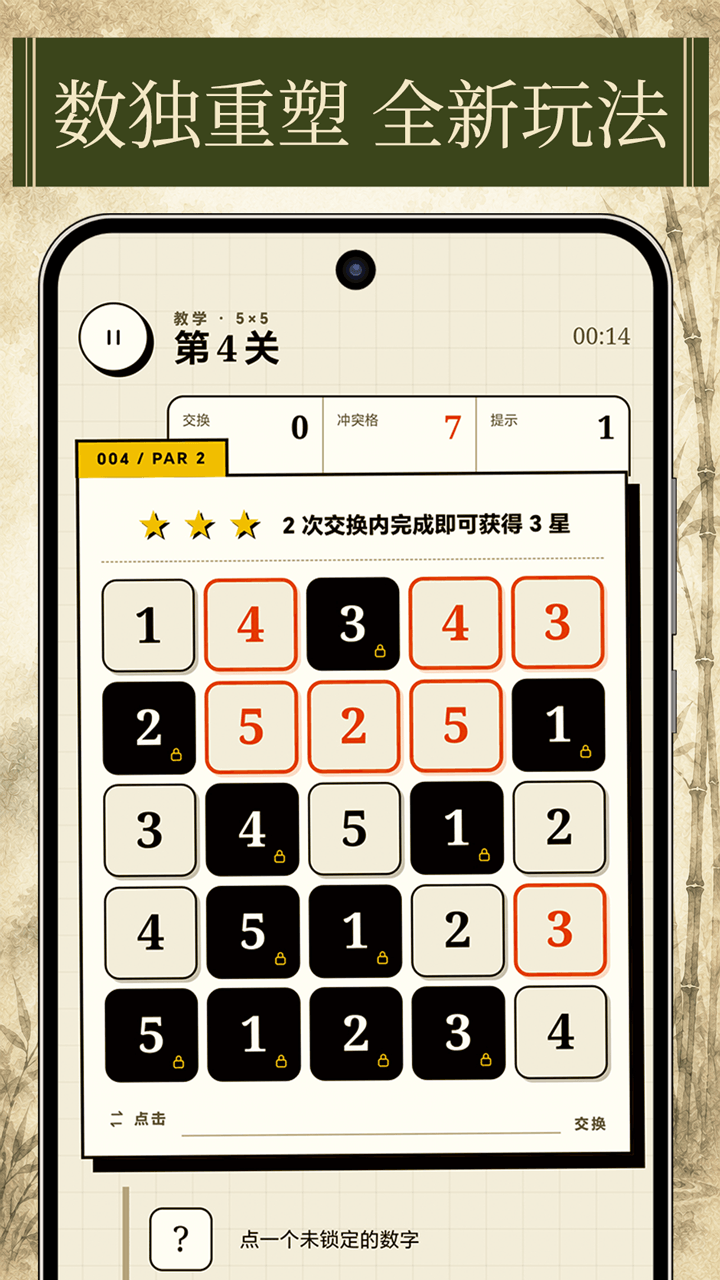
Swap Sudoku is a mobile logic game built around tapping, swapping and resolving conflicts. Every cell starts filled: players select two movable tiles to exchange their positions until no row or column contains duplicate numbers. Locked tiles provide clues, while move counts add an efficiency challenge beyond simply finishing. I developed this compact mechanic into a complete level-based experience and delivered it as an independent Android release on Google Play.
Product idea: one move explains the game
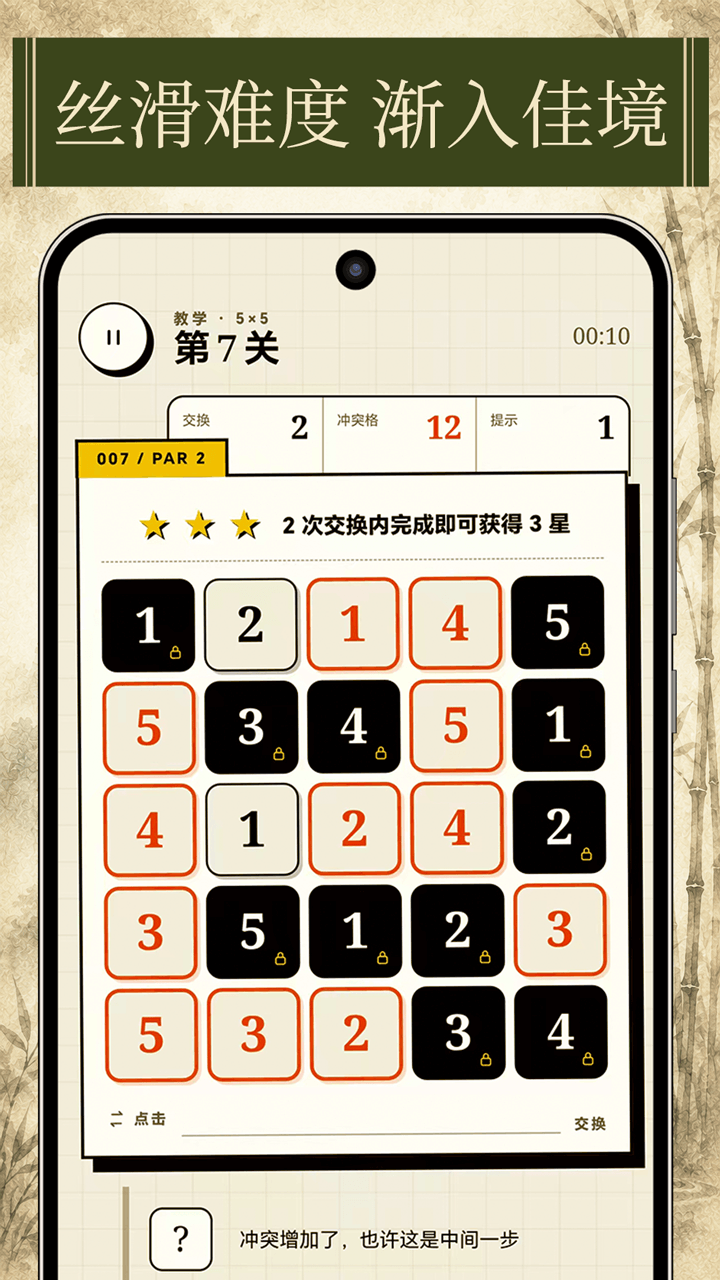
The board has no empty cells; the first question is which two numbers to exchange. A visible swap connects observation, experimentation and feedback, turning interaction into rule discovery. Row and column conflicts define the goal, while locked cells constrain the choices and turn a simple input into a planning challenge.
My contribution: from experience to delivery
As the independent developer, I connected game rules, screen structure, visual direction and implementation. The scope spans home, chapter selection, play, pause, results and settings, together with level data, persistence, advertising and analytics integration, Android packaging and store materials. The delivery goal is a coherent path from the first launch through completion, replay and the next level.
Visual direction: a calm mood with clear states
Paper-toned backgrounds, clear outlines and color distinctions create a relaxed puzzle interface, with distinct states for locked, selected, conflicting and hinted tiles. The project promotional artwork extends this direction with ink landscapes and warm rice-paper textures. Each exchange gives immediate feedback, while stars and restrained completion animation mark success. Sound, haptics, high contrast and reduced motion are adjustable so the visual treatment supports recognition and play.
Engineering delivery & iteration
The game uses HTML, CSS and JavaScript, packaged for Android with Capacitor. Levels, progress, audio and platform services are organized separately. The repository includes fixed-level validation and game-logic tests; delivery also covers the app package, privacy page, store copy and screenshots. The product is on Google Play. The current focus is acquisition and first-play validation: use store visits, installs, tutorial completion and first-level completion to prioritize store messaging or onboarding.
Key design & implementation
- 01
Guided onboarding makes the first swap clear
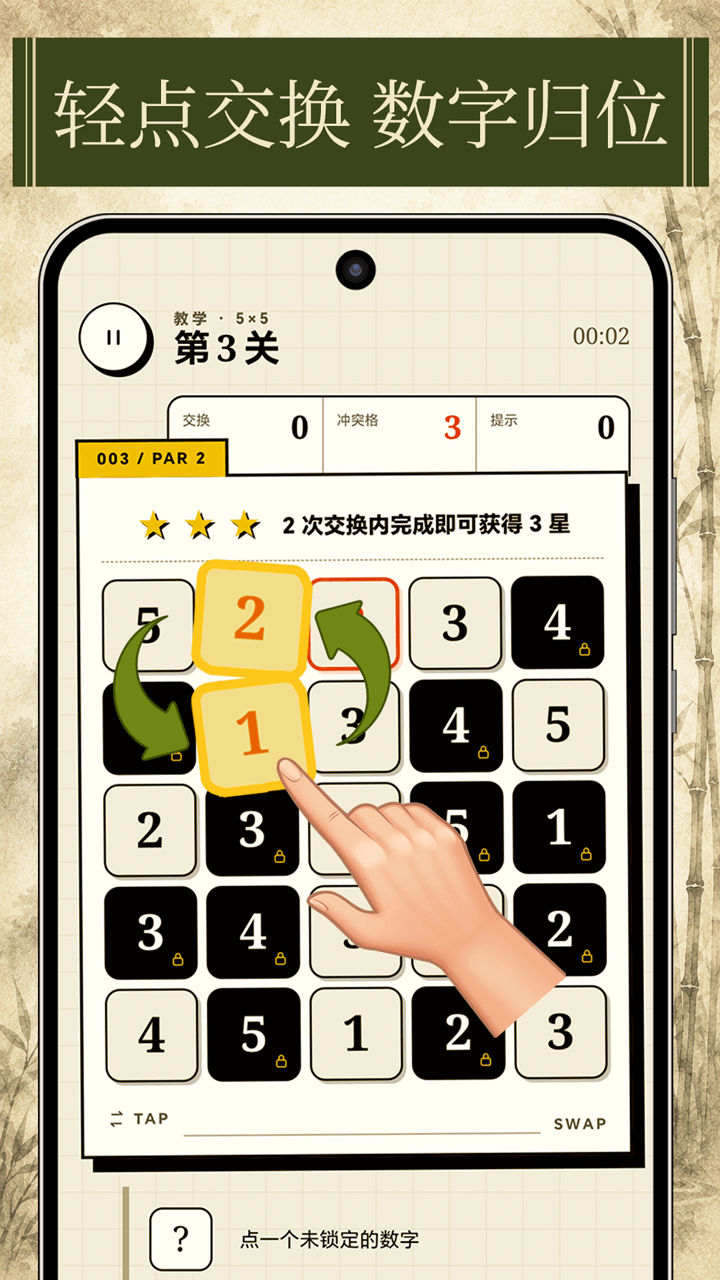
The tutorial introduces row and column rules, locked tiles and conflict markers before focusing attention on the two tiles to tap. A hand cue guides an actual exchange, and early levels reinforce the interaction instead of presenting every rule at once.
- 02
100 levels across 10 chapters, with room to improve
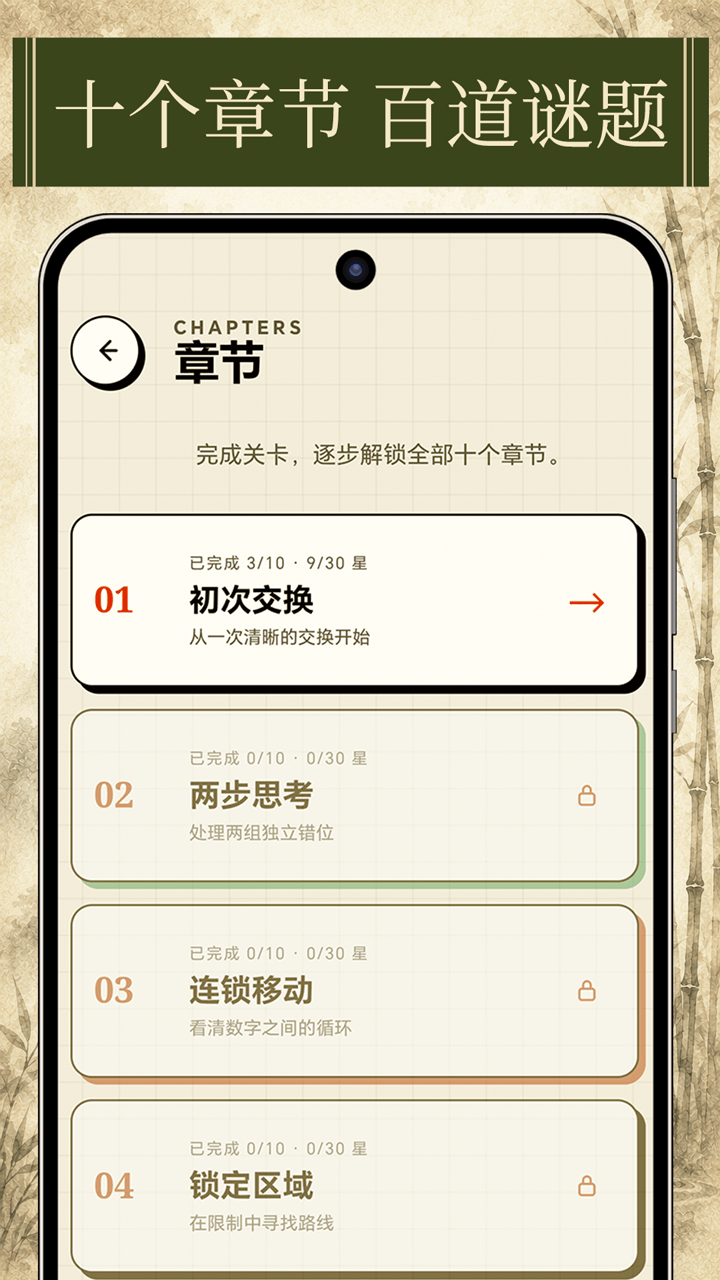
Ten chapters contain ten fixed levels each, unlocked in sequence. Each level has a target move count and awards one to three stars based on swaps used. Completion states and local best moves, times and stars support both steady progression and more efficient replay.
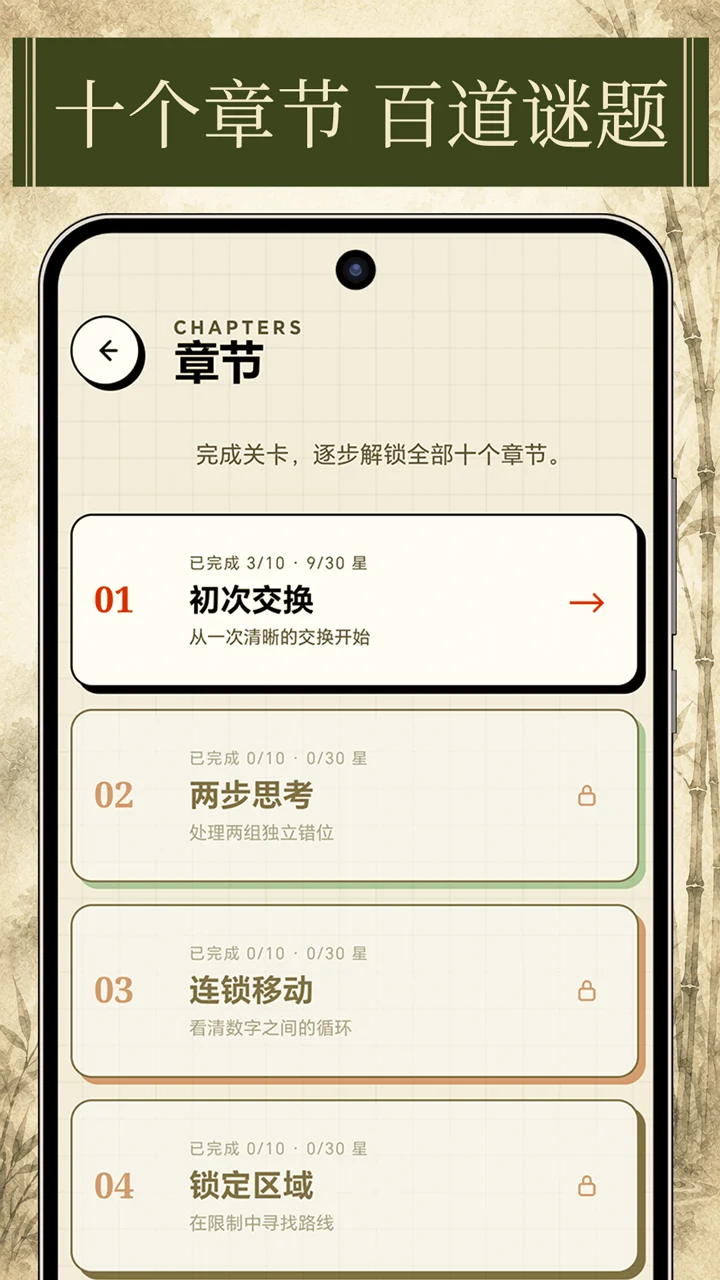
V1.2.0 Chinese promotional artwork · Ten chapters, 100 puzzles 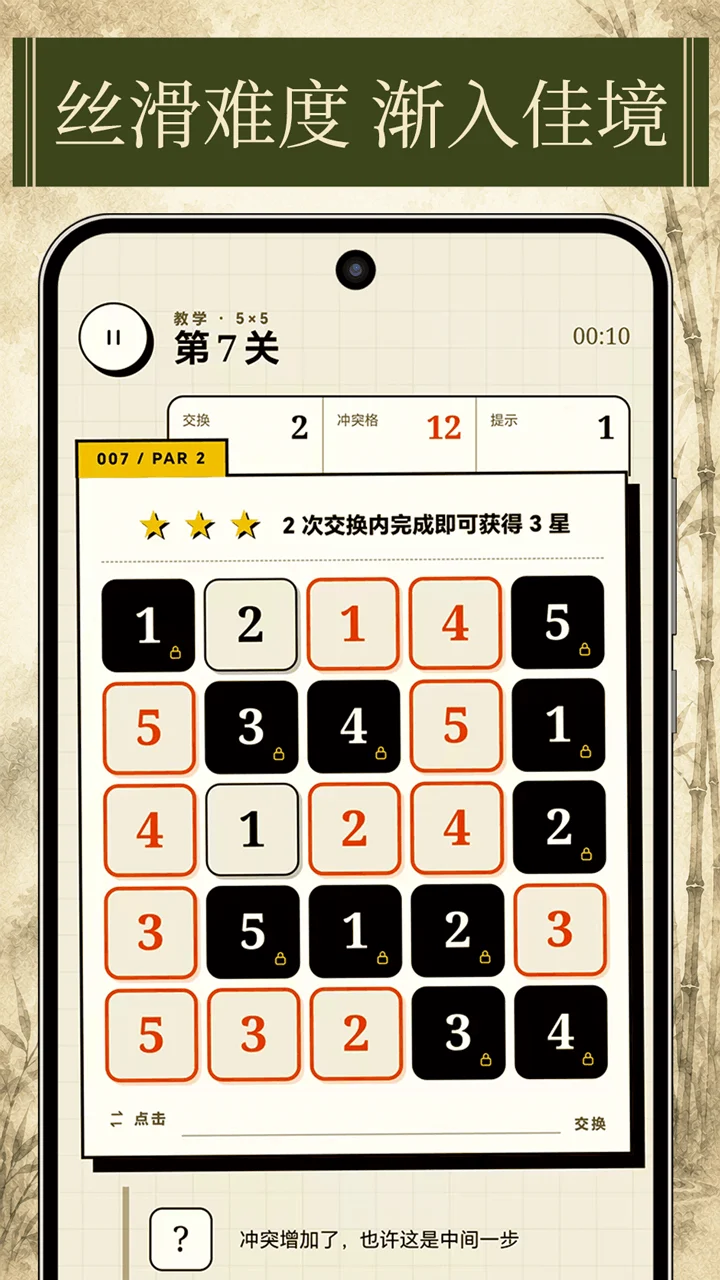
V1.2.0 Chinese promotional artwork · Progression and conflict feedback 
V1.2.0 Chinese promotional artwork · Move targets and three stars - 03
Conflicts, hints and undo support understandable feedback
Conflict highlights and counts make the board state visible, and feedback responds to each move. Hints mark a suggested pair without taking the move away from the player; undo supports experimentation. Basic allowances and optional additional rewards provide a route forward when players get stuck.
- 04
No sign-in, with progress kept on the device
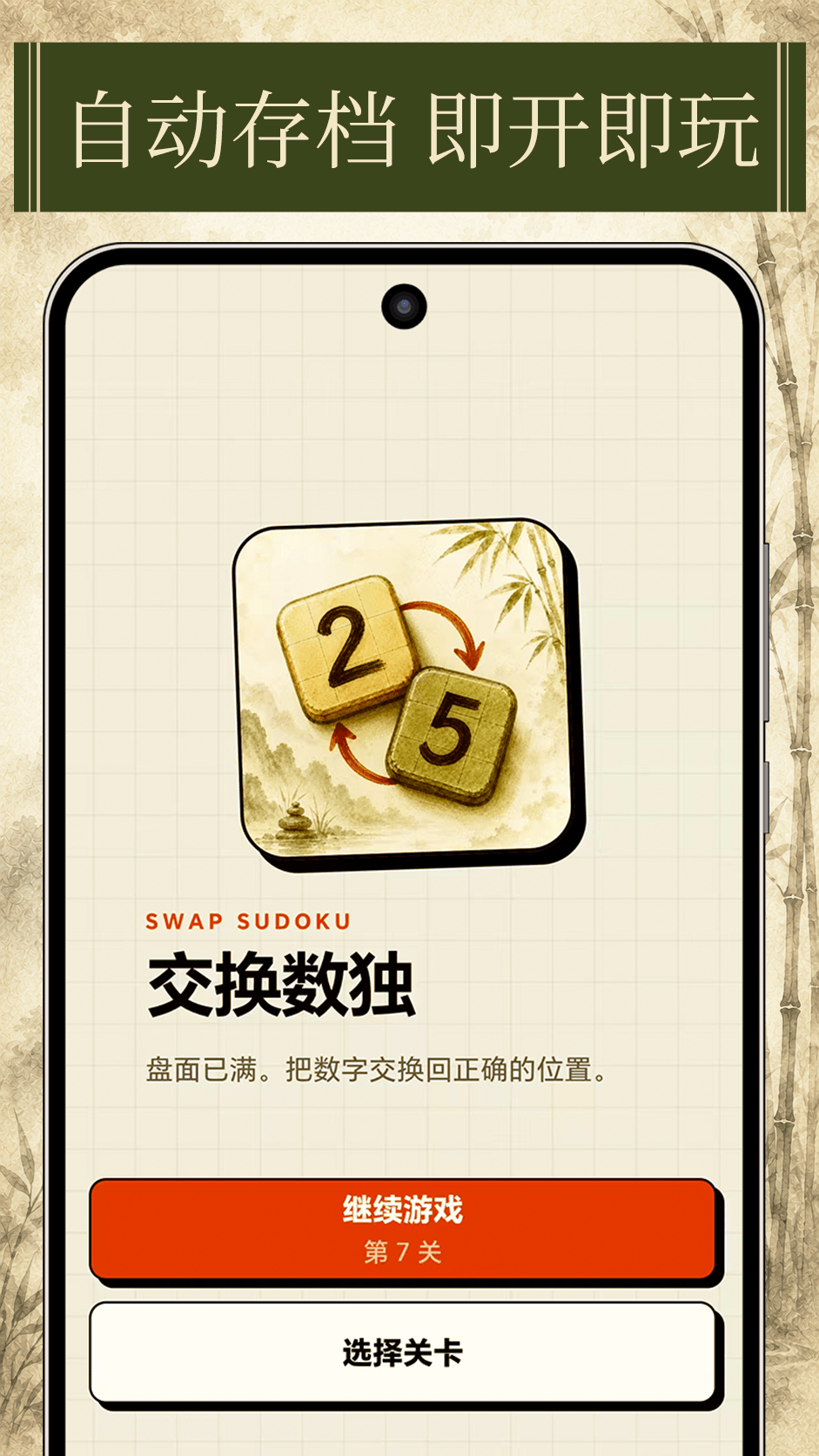
Core puzzles are playable offline. The current game, unlocked levels, best records and preferences are stored locally without an account. Pause, return and resume support short sessions with less friction after interruptions. Network-based services such as ad rewards still require a connection.
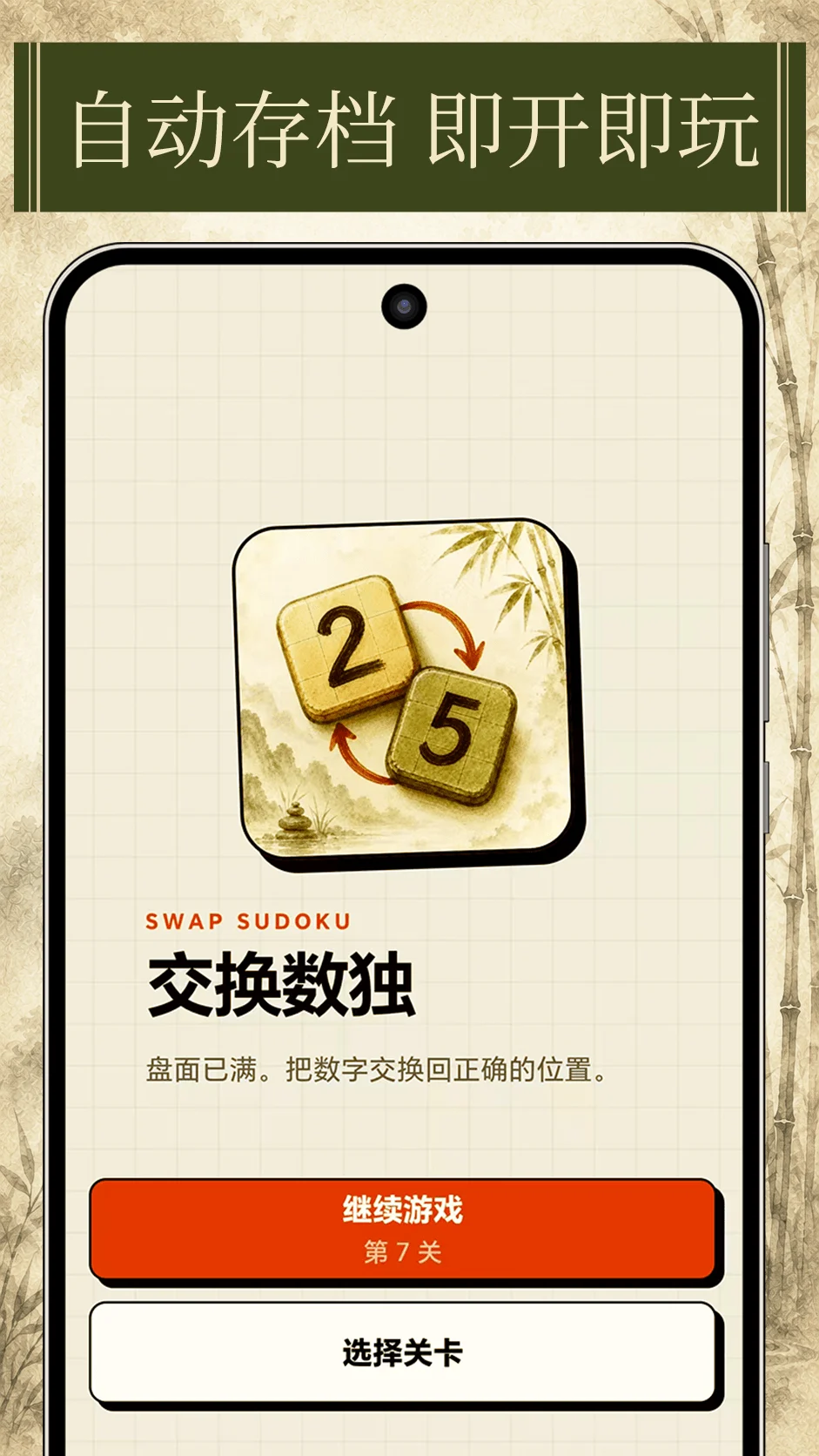
V1.2.0 Chinese promotional artwork · Save and resume 
V1.2.0 lifestyle promotional artwork · Offline core puzzles - 05
Language and platform support for an overseas release
Chinese and English form the base experience and store presentation. The current iteration also includes Traditional Chinese, Japanese and Korean interface options with English fallback. Android integrations handle advertising, review requests and feedback alongside the core game.
- 06
Monetization and measurement inform the next iteration
AdMob rewarded and interstitial flows support monetization, including player-requested extra hints or undo and handling for loading, failure and timeout. Firebase events cover onboarding, level starts and completions, hints and ads, alongside crash reporting. Together, these integrations support diagnosis and help identify where players encounter friction.


Implementation & tools
- HTML / CSS
- JavaScript
- Capacitor / Android
- Local storage
- AdMob
- Firebase Analytics / Crashlytics
Project links

Ai Dream Studio
AI product · Independent development
From design to independent delivery: refined prompt templates and simple inputs make AI image creation more approachable.
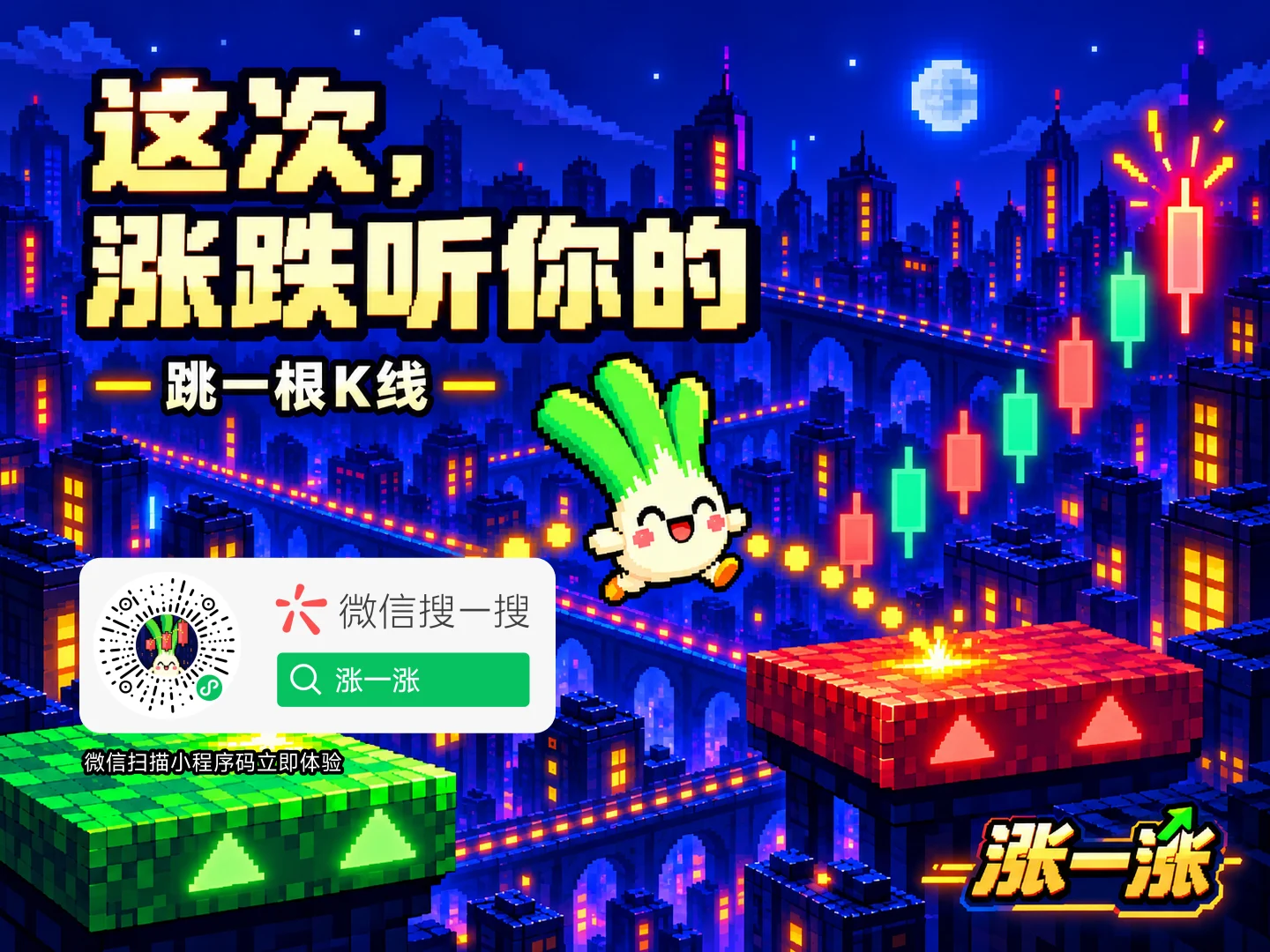
Zhang Yi Zhang
WeChat game · Independent development
Combining charged jumps, fictional trading and a little chive character through independent game design, visual direction, development and platform adaptation.

Xialin Commerce
Business platform · Three-person collaboration
A commerce service platform connecting customers and operators through orders, credits and batch delivery, with a Listing Doctor and AI service center extension design.