Zhang Yi Zhang.
Every jump draws the next candle.
Independent developer · Game design / Interaction & visuals / Development / Platform adaptation
OVERVIEW / WECHAT MINI GAME
Every jump draws your next candle.
Zhang Yi Zhang combines one-handed charged jumps with virtual trading. Guide a little chive across red and green platforms: each new landing changes the price and draws a candlestick.
Buy and sell cards and position sizing add strategic choices, while grapples, bulls and moving hazards reshape the route and pace. Each landing is both a movement decision and a trading decision.
- 01Choose a landing
- 02Move the market
- 03Execute a trade
- 04Review the run
Scan to play your first candlestick

Scan with WeChat or search for 涨一涨. All prices and funds are virtual game values.
My contribution
I independently own game design, balancing, interaction design, character and prop direction, core development and platform adaptation. Jumps, trading, hazards and results form a complete run, with ongoing work on tutorials, sharing, background recovery and release validation.
Character: a little chive on a big adventure
A little chive becomes the player's avatar, turning a familiar market metaphor into a friendly pixel character. Tall green leaves, a rounded pale body and orange feet create a distinctive silhouette against the blue city and red-green platforms.

The pose study explores charging, jumping, landing and grappling. Leaf angles, body compression and changing expressions communicate force and emotion, giving the character a role in both action feedback and promotional storytelling.
Movement meets strategy
Charge, jump, land: movement drives the market
Hold to charge, release to jump and adjust the distance through charge strength, with an option to cancel. Early trajectory assistance teaches the controls before becoming less explicit. Only a new platform advances the market; returning to the same platform does not repeat settlement. Stationary, moving and color-changing platforms progressively add timing and judgment challenges.
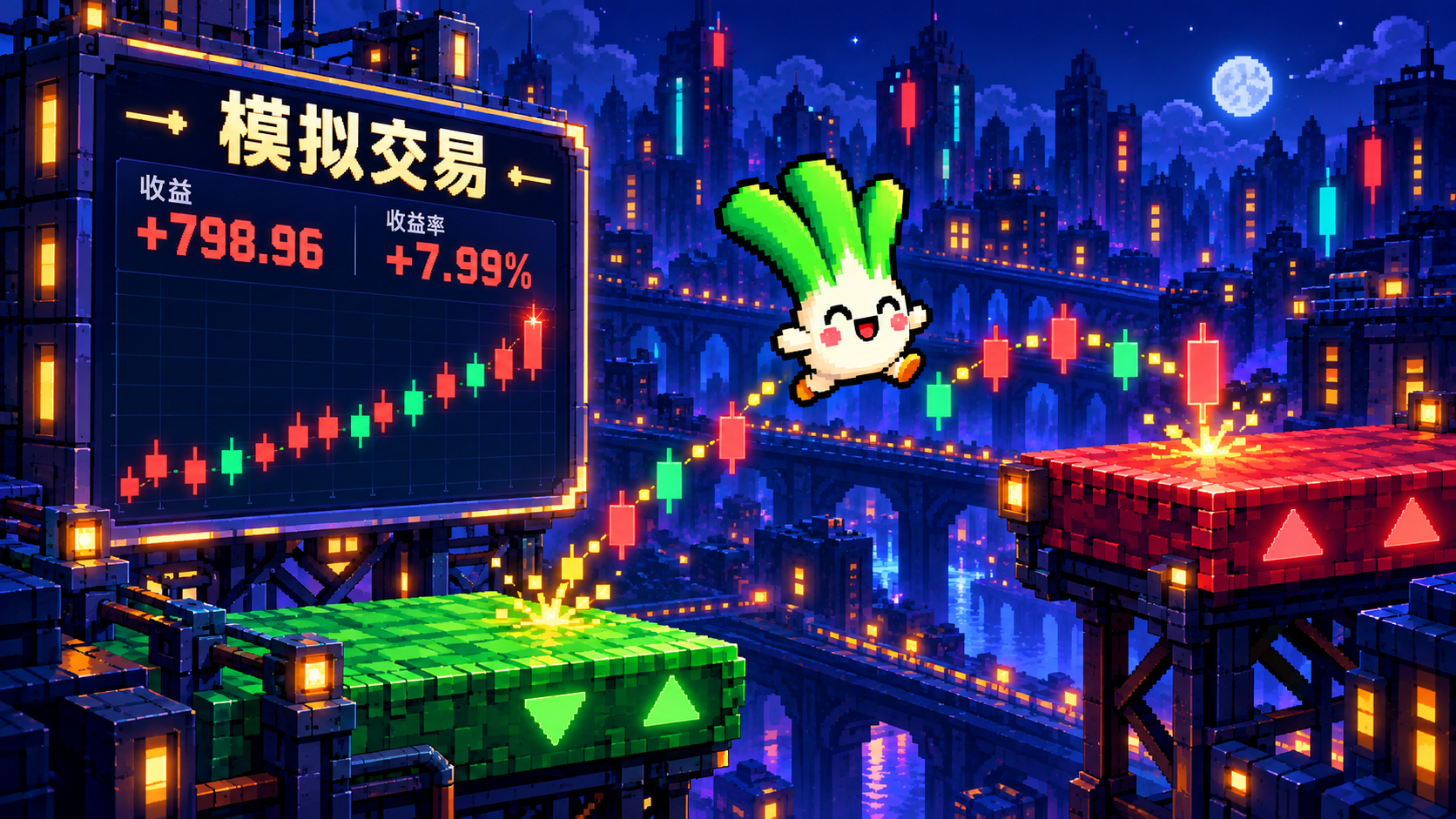


Trading and position size make landings strategic
Red platforms move the price up and green platforms move it down, with charge and platform multipliers shaping the movement. Players can allocate 10–90% of remaining cash to a purchase and place buy or sell cards on upcoming platforms. The price updates before the landing-triggered trade executes. Cash, holdings, fees and equity form a fictional ledger, connecting returns to decisions rather than a single abstract score.
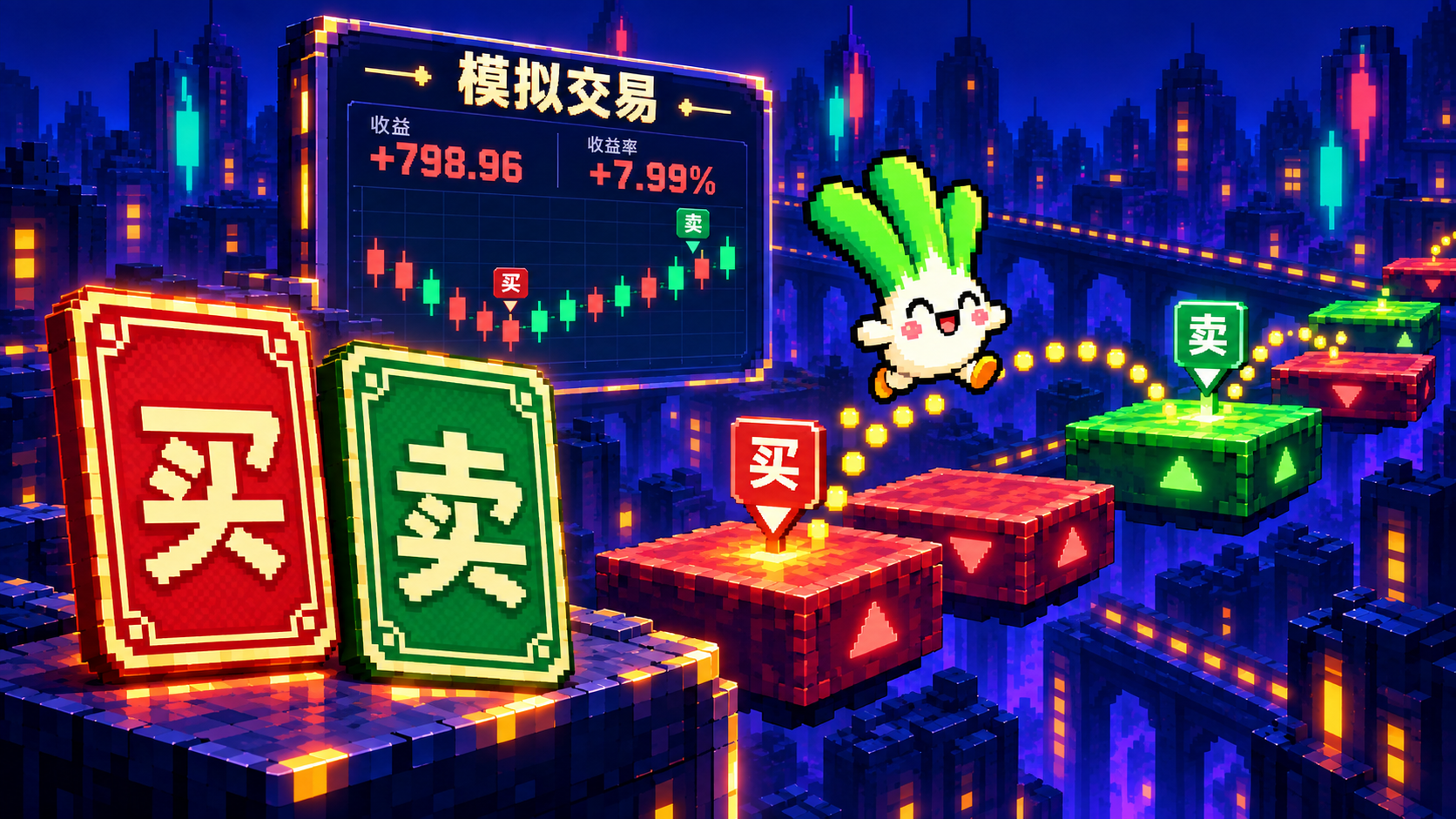
Tools expand player choices
Four tools address route safety, trading timing and forward momentum. Choosing when to use a pickup connects each action to the current situation.

Grapple · Change the route
Move safely to a chosen platform for an alternative to a risky jump.

Buy card · Plan an entry
Place a buy on a target platform and plan around its landing price.

Sell card · Plan an exit
Connect a planned sale with the route, making each landing a trading decision.

Bull · Shift the pace
A multi-platform rush and rising candles create a different rhythm from regular jumps.
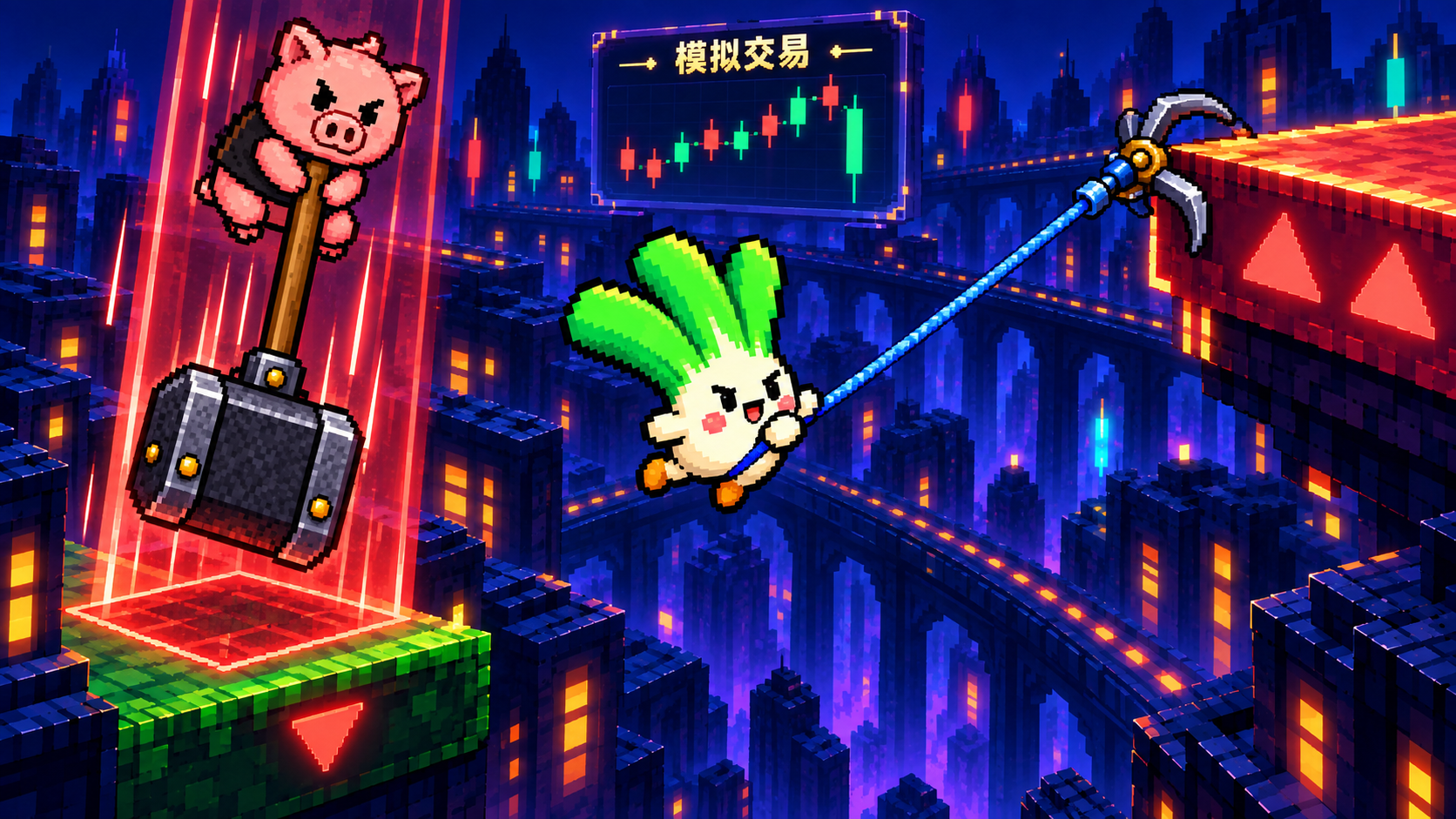
Observe, anticipate, act
Flying knives pressure the route, the hammer pig demands timing, and the swan and wind introduce spatial changes. The aim is to keep visual cues consistent with danger: observe the motion, anticipate an opening, then jump or use a tool.

Flying knife
A narrow silhouette makes its dangerous direction easy to read.
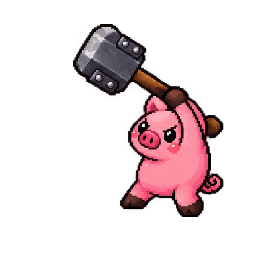
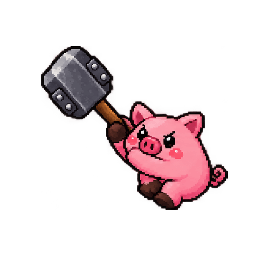
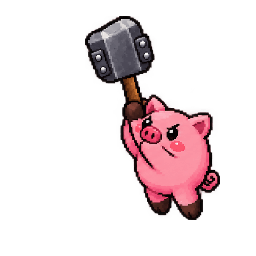
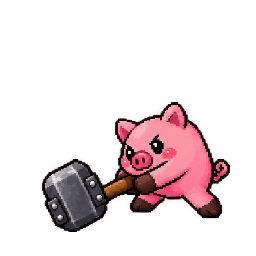
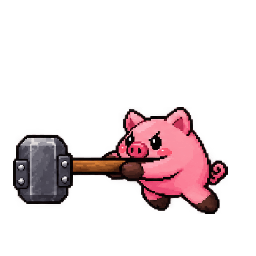
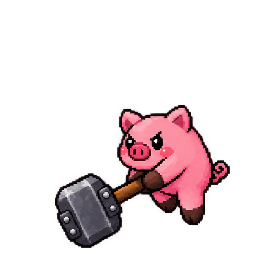
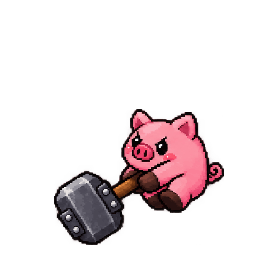
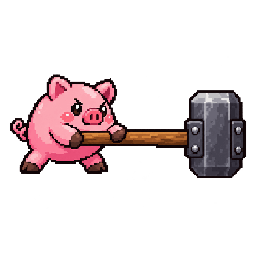
Hammer pig
Changes between wind-up and strike communicate a timing challenge.

Black swan
An unexpected market event becomes a recognizable character in the game world.

Wind field
A swirling texture distinguishes the area effect from the swan itself.
Visual identity and state feedback
The chive, bull and black swan give the market theme a playful cast. Red and green platforms communicate direction, while grapples, trading cards and wind effects distinguish actions from threats. Silhouettes, color and motion states support quick recognition during play. The artwork below consists of transparent sprites and frames exported from the game assets.
One tool, distinct states
The grapple icon, pickup bubble and claw head support recognition, discovery and execution. Buy and sell cards also have dedicated pickup bubbles, connecting collectible objects to their actions.




Frame sequences make change readable
The bull has running and riding states; the pig, swan and wind use frame sequences to express motion. The static strips below show the exported frame order for comparing poses and silhouettes, rather than simulating in-game timing.
 01
 02
 03
 01
 02
 03
 01
 0203
 04
 05
 06
 07
 01
 02
 03
 04
 0506
 07
 0801
 02
 03
 04
Compare earlier and current exported artwork
Hammer pig
Black swan

Wind field

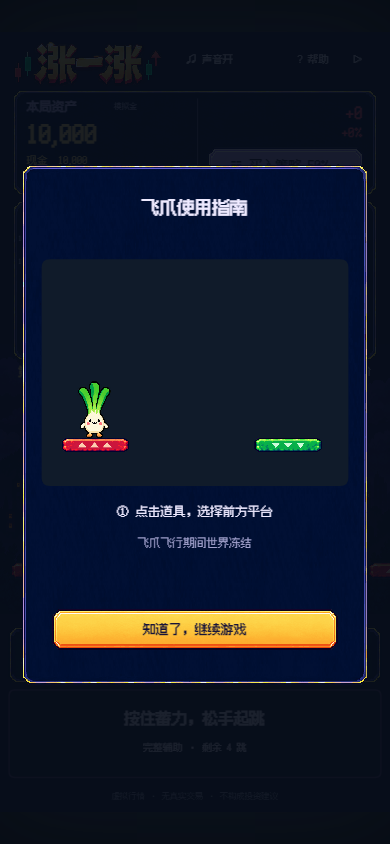
From onboarding to a closing recap
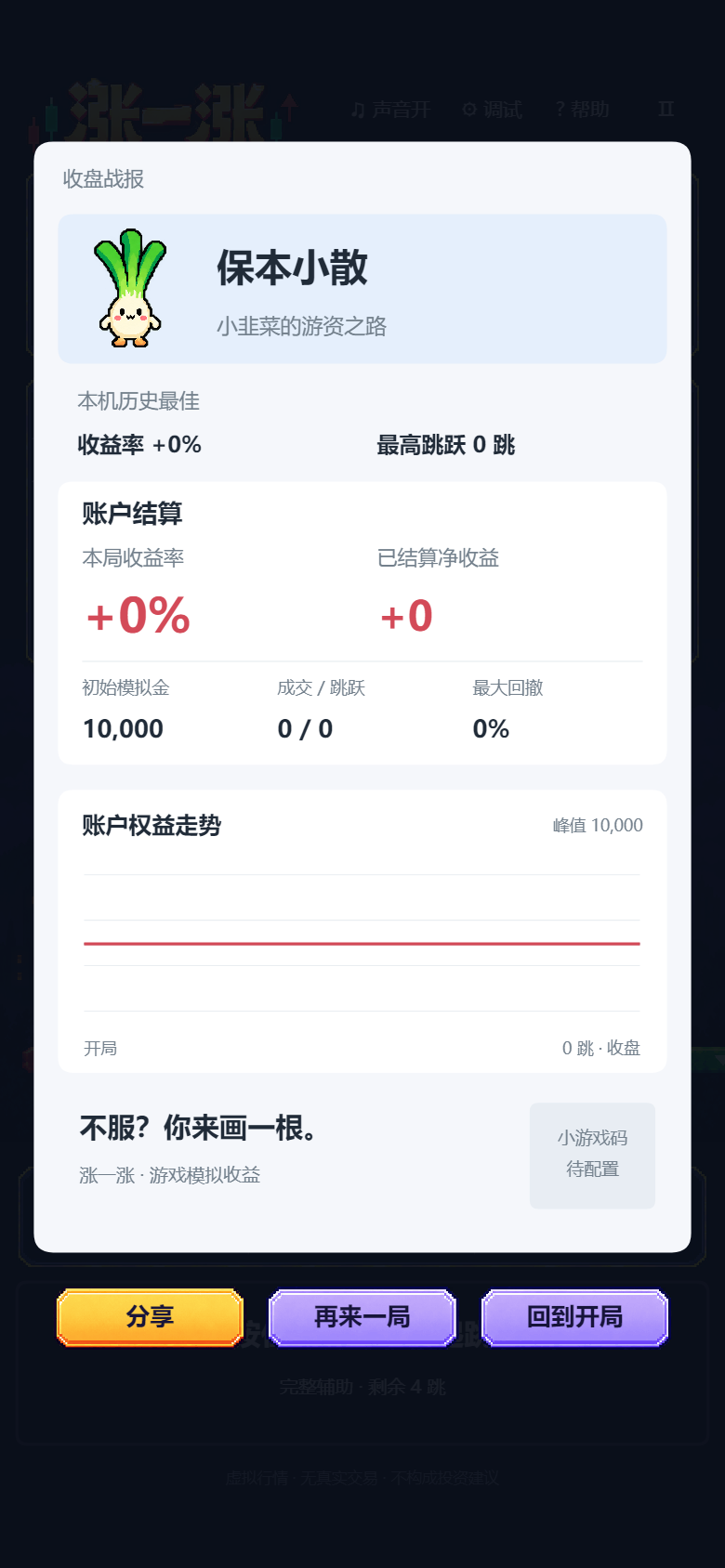
Tool tutorials explain when and how to act, connecting basic controls to strategy. A closing recap, returns and the equity curve review the run, while revival and sharing support another attempt.
Engineering and iteration
Core rules, the fictional ledger, rendering and platform services are separated. Decimal arithmetic handles balances and fees, and configuration stays fixed during a run. Login and remote configuration run in the background, with cached or default values supporting entry. Iteration focuses on returning from shares, pause and resume after backgrounding, audio and ad failure states.
Current status
The WeChat game is live and continues to evolve. TapTap mini-game and Android adaptations remain at candidate-build and integration-validation stages. Current work centers on individual runs and local best records, with device checks for background recovery, network services and cross-device saves. Interface examples on this page come from local test versions.
Implementation & tools
- TypeScript
- Canvas 2D
- decimal.js
- WeChat Mini Game
- Node.js / SQLite
- TapTap / Android adaptation

Ai Dream Studio
AI product · Independent development
From design to independent delivery: refined prompt templates and simple inputs make AI image creation more approachable.

Xialin Commerce
Business platform · Three-person collaboration
A commerce service platform connecting customers and operators through orders, credits and batch delivery, with a Listing Doctor and AI service center extension design.
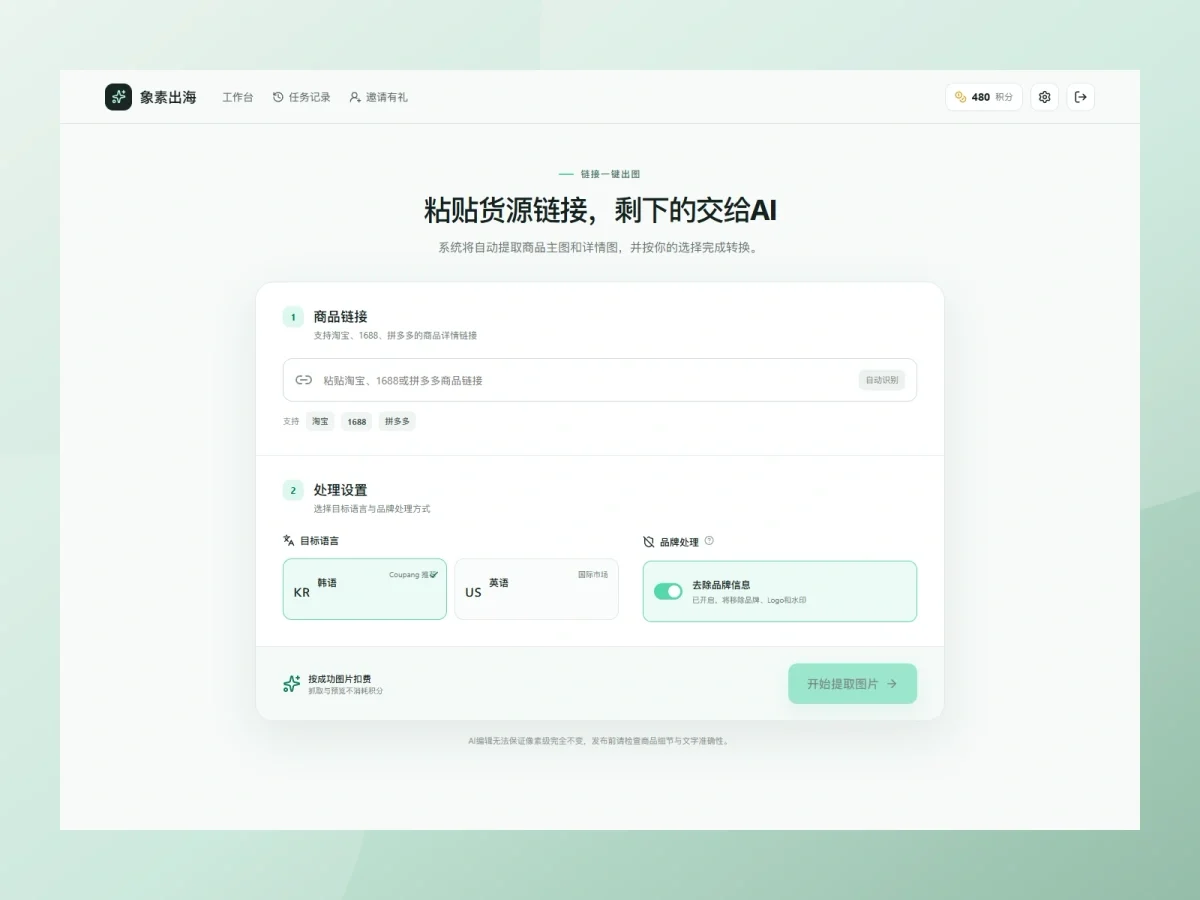
Xiangsu Overseas
AI commerce tool · Independent development
A product-image workspace for cross-border sellers: source extraction, image selection, Korean/English localization and batch delivery. Independently designed and developed; v1 in development.