Xiangsu Overseas.
From a sourcing link to a localized product image set.
Sole creator · Product strategy / UX & visual design / Full-stack engineering
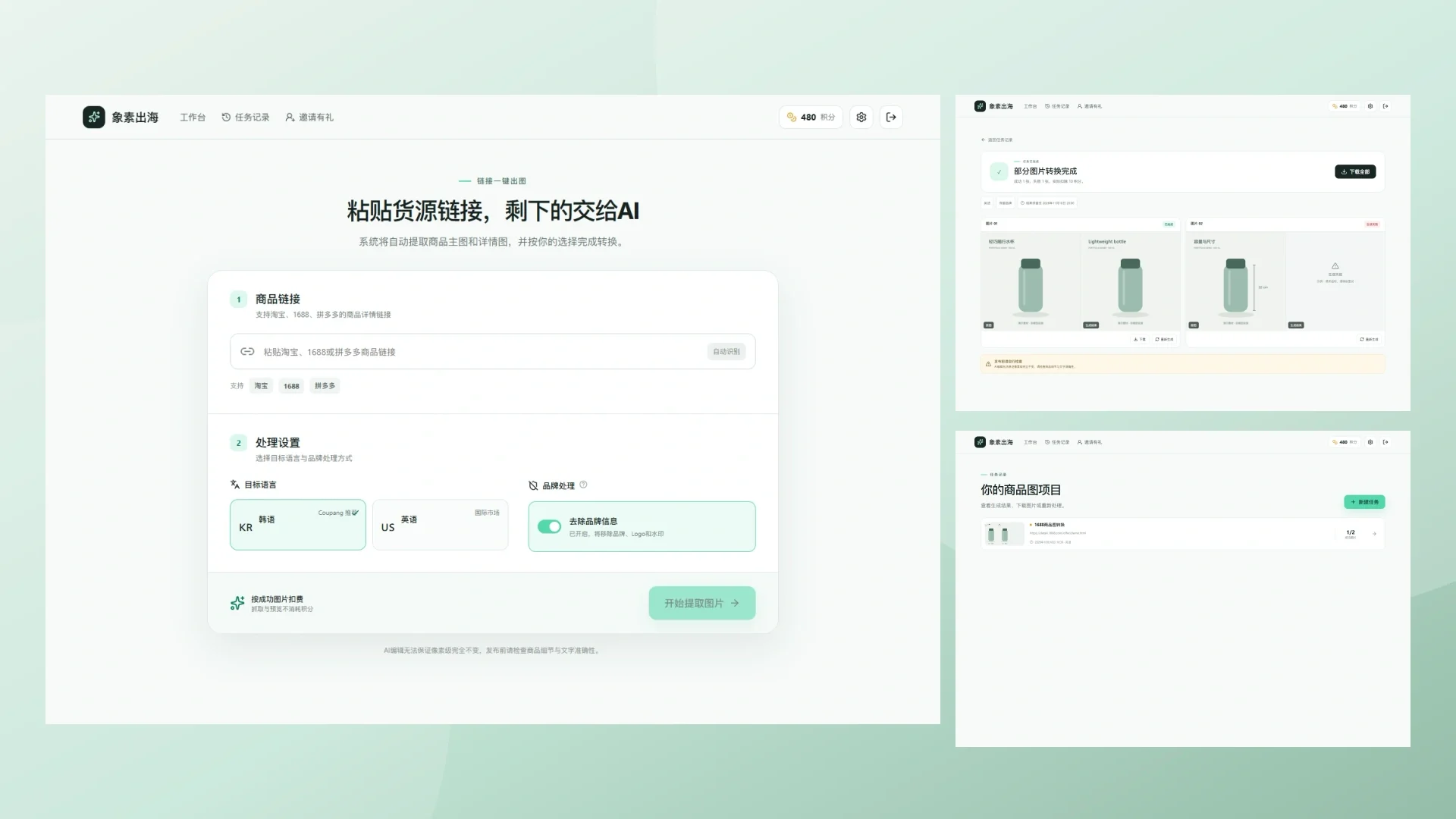
Complete development-page captures · 16:9 · Demo tasks, credits and product illustrations; not measured model output
Turn repetitive image work
into a clear workflow.
Preparing an overseas listing can involve sourcing pages, image folders, translation tools and design software. Xiangsu starts with a focused task: submit a product link, then select, localize, review and download images in one workspace.
I own the entire product, from planning and interaction design to visual design, frontend, backend and processing workflows. The first version is in development: the main flow exists in code and interfaces, while production payments, model quality and real customer demand still need validation.
Start with the listing task.
Desk research · October 2026. Positioning remains a hypothesis for customer interviews.
RMB 2.75 trillion
China’s 2025 cross-border e-commerce trade value, reported by the NBS, provides context for recurring commerce operations. It is not an estimate of the market for image tools.
NBS ↗One product, several image roles
Coupang’s listing guidance distinguishes main, additional, option and description assets. Its image guide separates the main view from detail and lifestyle views. Selecting the right assets and preserving their order matter alongside generation.
Coupang listing guide ↗From editing to delivery
Designkit covers commerce creatives and localization; Photoroom emphasizes consistent batch edits. Xiangsu focuses on a narrower workflow connecting Chinese sourcing links, human selection, localization and download. That distinction still needs task-based validation.
Begin with small teams and a specific job.
Candidate segments, not acquired customers. Validate the Korean-market use case before expanding.
Small sellers targeting Korea
Source products in China and prepare Korean listing assets. They need approachable controls, accurate text and predictable per-task costs.
Validate fewer transfers and less rework per image set.Multi-market operators
Prepare language variants of the same product, keep category and order intact, inspect differences and revisit past jobs.
Validate repeat-task time and reuse.Small catalog service teams
Need clear scope, per-image failure tracking and packaged delivery. Team permissions, client separation and approval flows are future exploration.
Validate delivery traceability and cost clarity.Four steps, with human review built in.
Actual development-page captures. Tasks, credits, product illustrations and translated examples are fixed demo fixtures, not measured model output.
Keep the setup focused
Enter a Taobao, Tmall, 1688 or Pinduoduo product link, choose Korean or English and set brand handling. Extraction is separate from generation so users can inspect assets before committing.
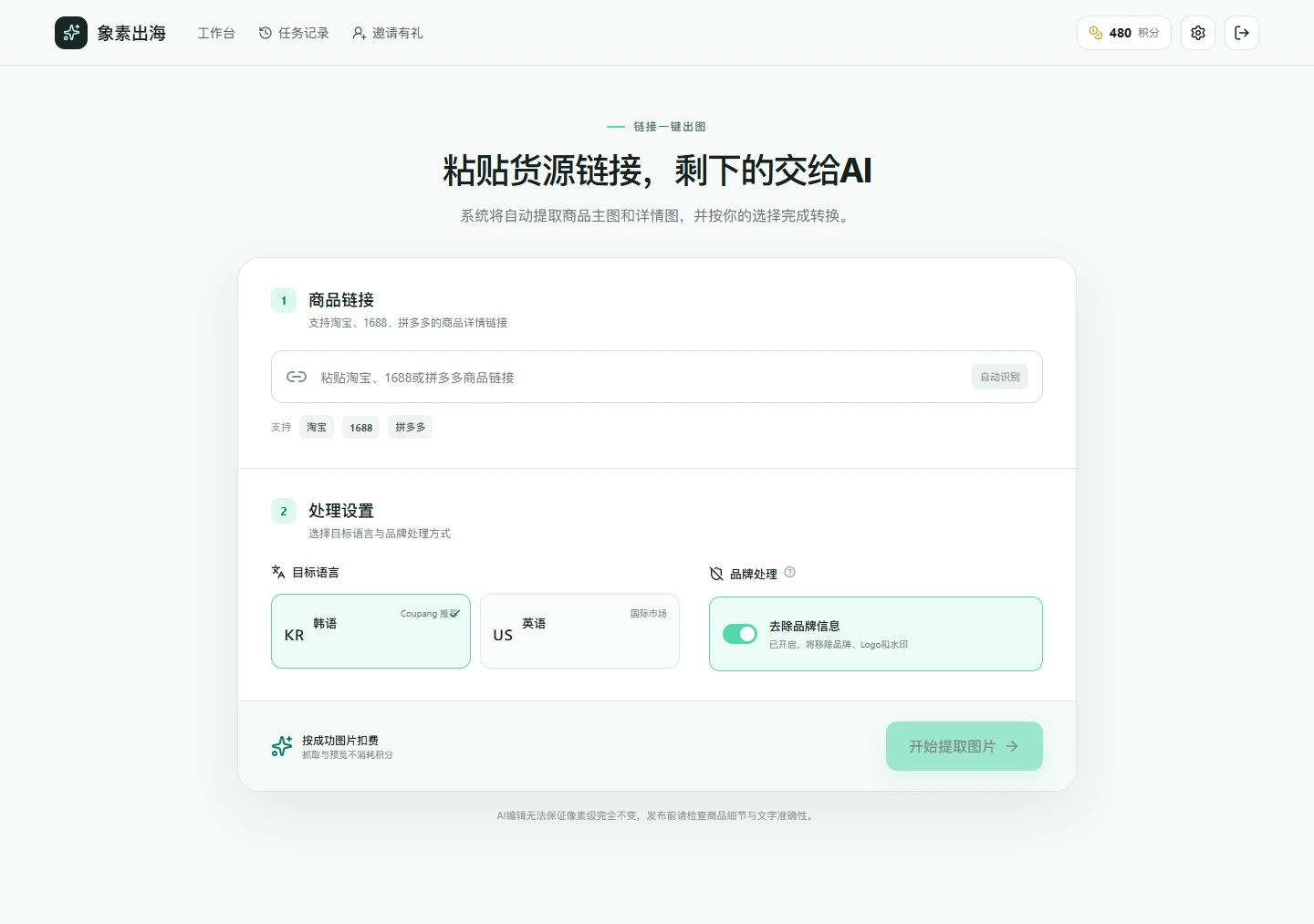
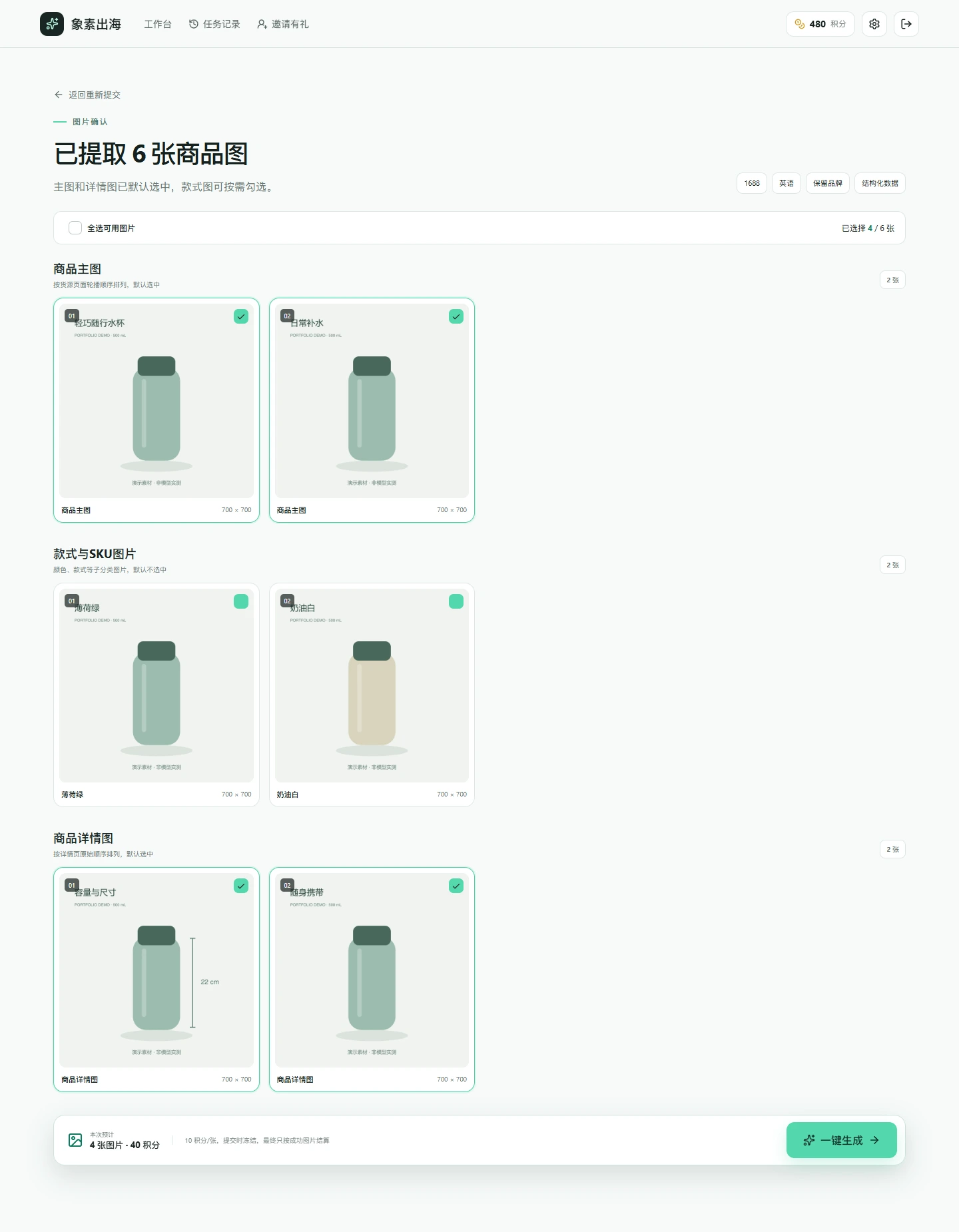
Classify first, then confirm
Main, variant and detail images appear in separate groups. Main and detail images are selected by default; variants are opt-in. Image count and estimated credits make scope and cost visible before submission.
Structured product data is the preferred source. The fallback reads public Product JSON-LD rather than collecting every page image or review photo.
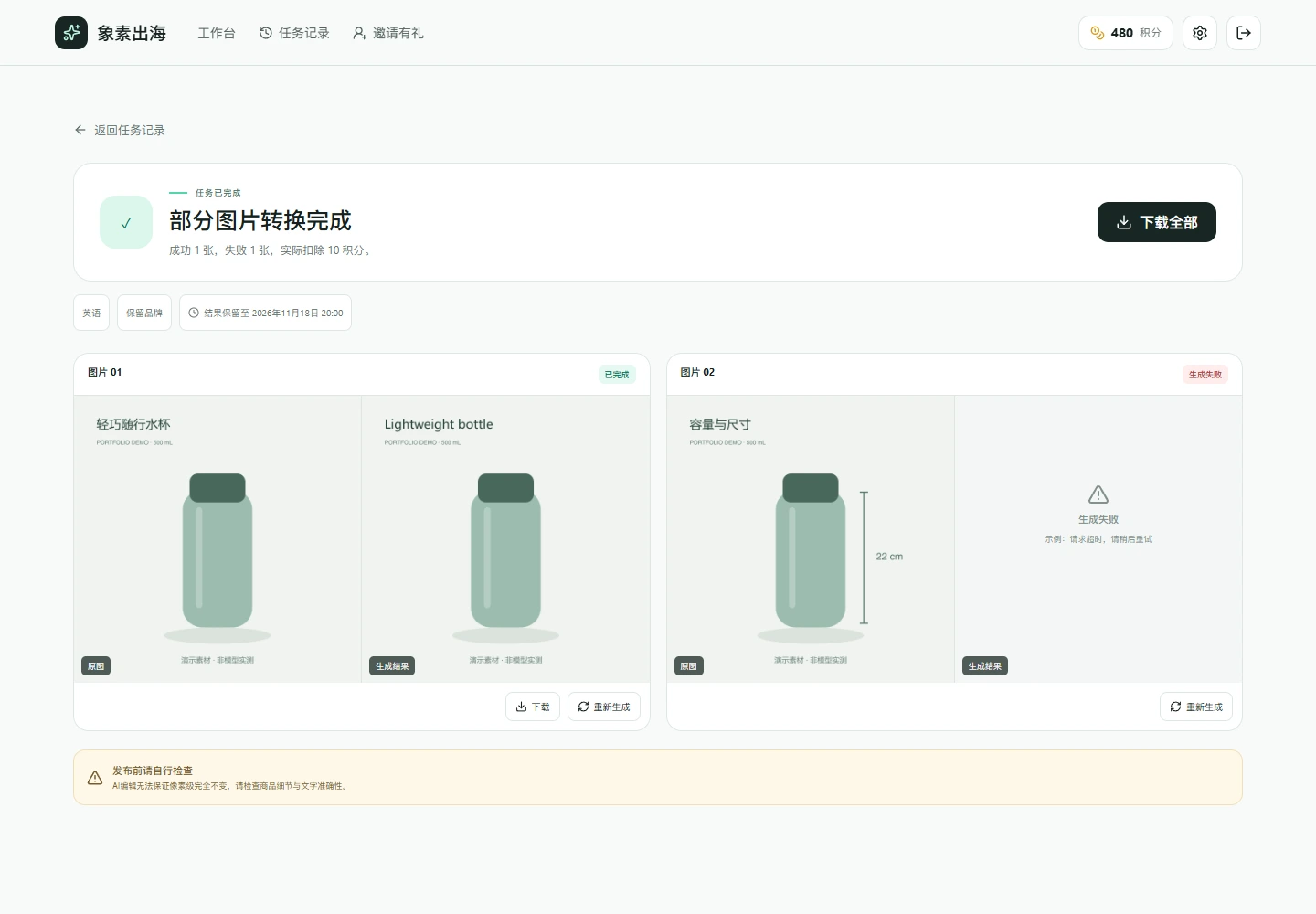
Explain outcomes and costs
The result page compares source and output per image, preserves partial success and offers retry and ZIP download. Credits are held on submission and settled for successful images. Regeneration requests a new payment confirmation.
Model instructions constrain appearance, dimensions and composition, but cannot guarantee pixel-level fidelity. Product details and translations still require human review before publishing.
Make each job easy to revisit
History brings together sourcing links, language, completed counts and timestamps for review, download or reprocessing. The result page shows retention dates so file delivery is an explicit part of the workflow.
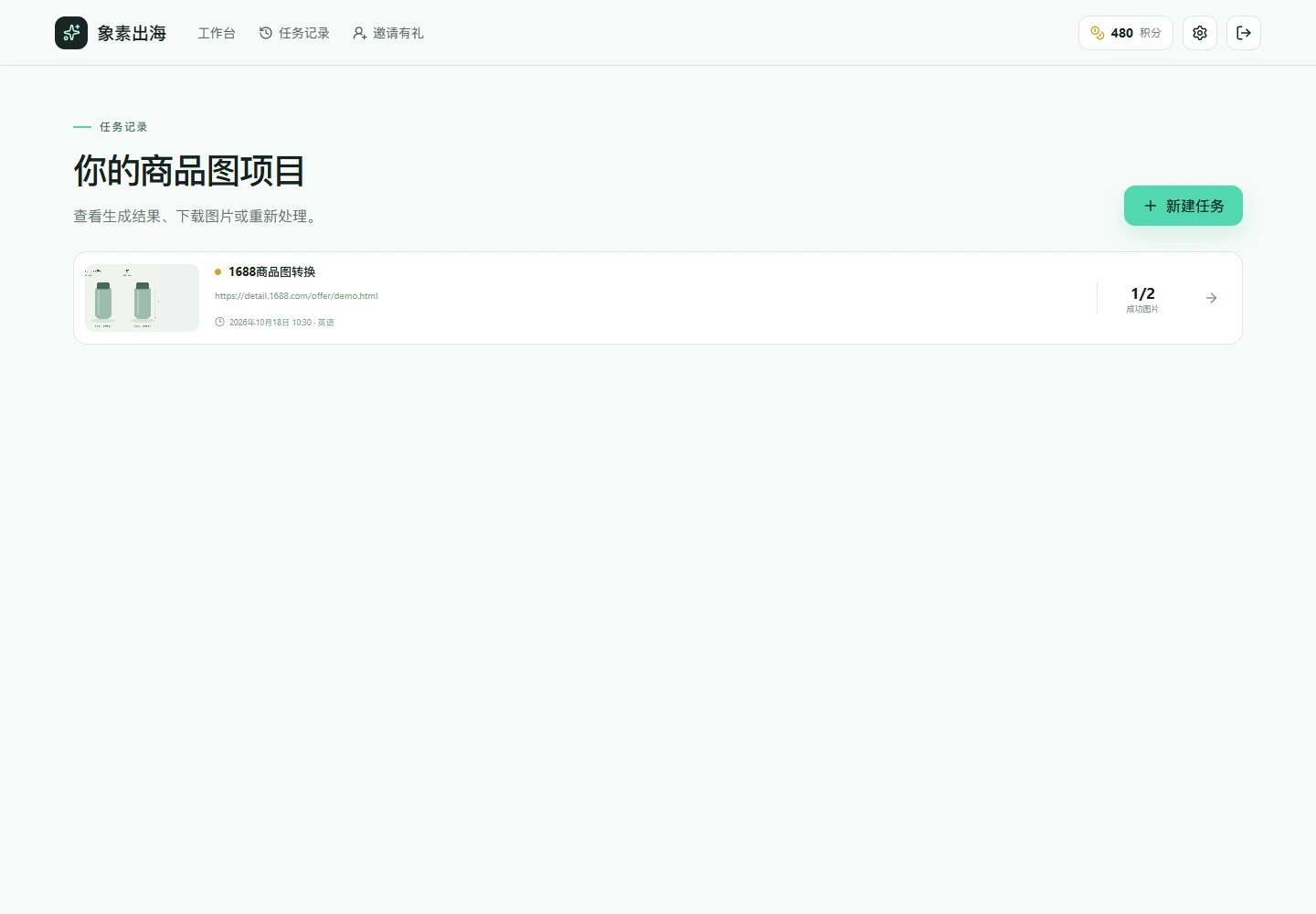
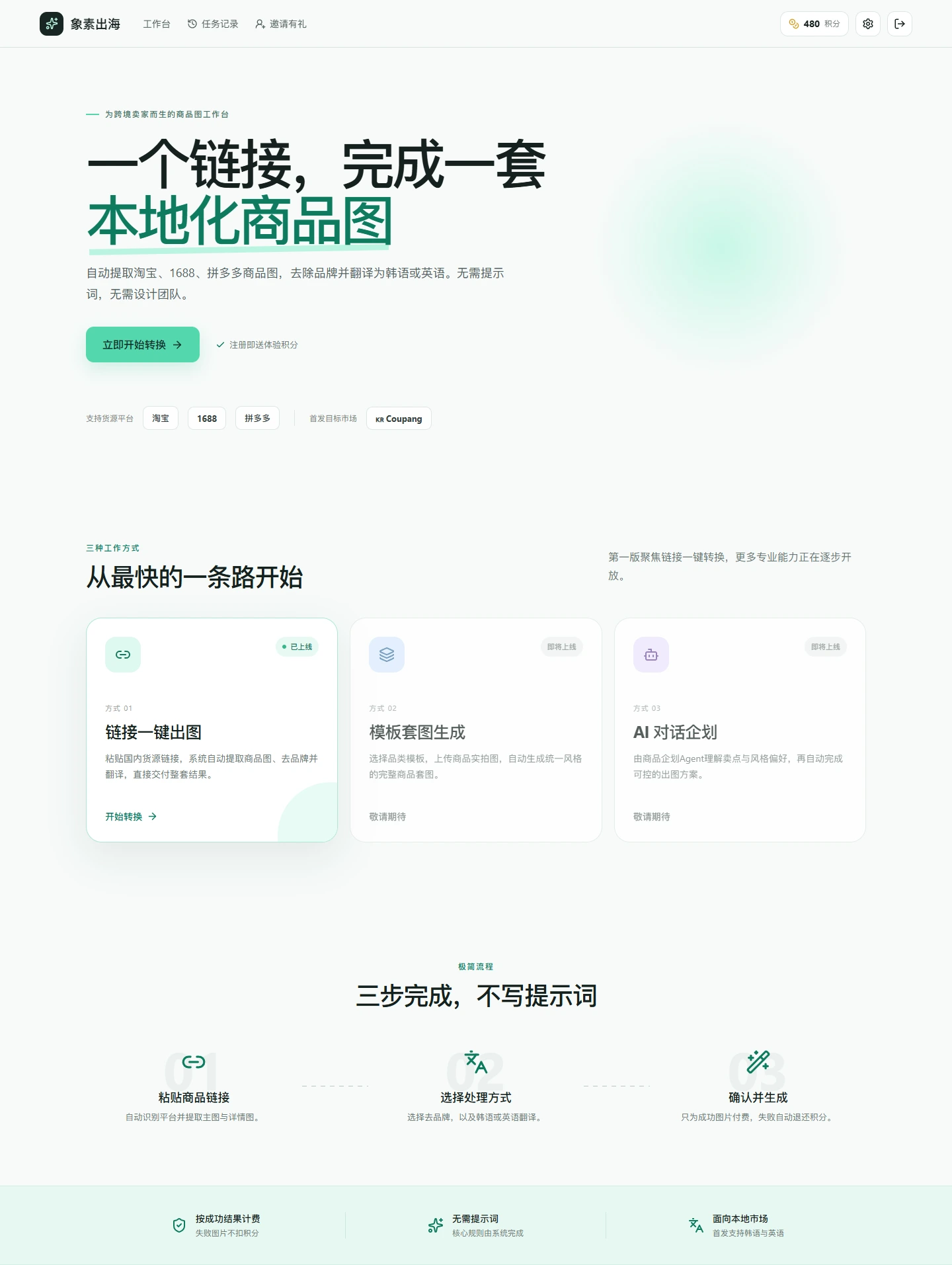
View the product homepage and planned modes
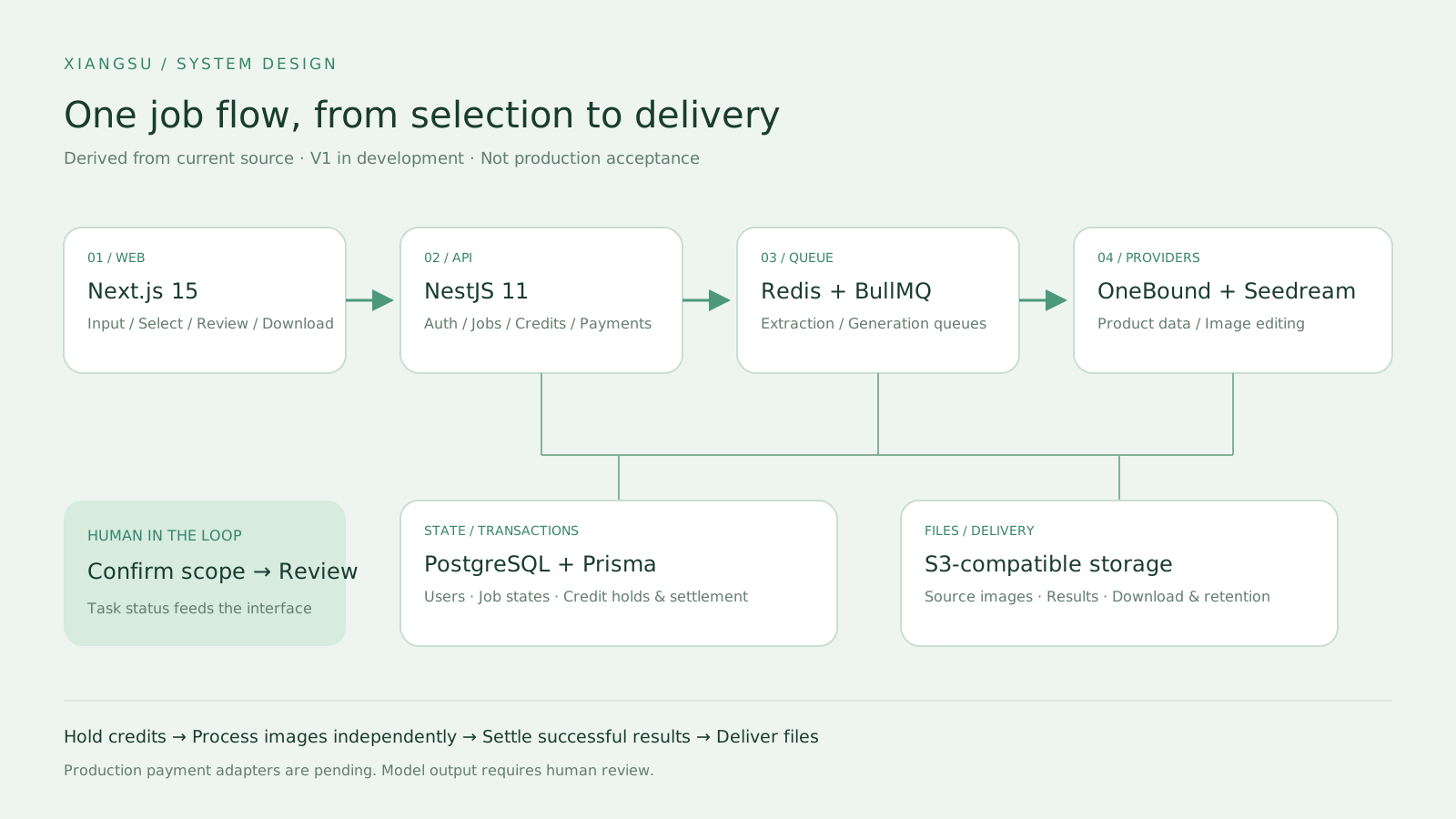
Connect the interface, model and delivery with jobs.
Derived from current repository modules and processing logic. This describes implementation design, not production acceptance.
Frontend guides decisions
Next.js provides input, confirmation, results and history. NestJS exposes authentication, job, credit and payment modules. Task status connects background progress to the interface.
Async work and per-image settlement
Redis / BullMQ separates extraction and generation, tracking each image. PostgreSQL / Prisma stores users, jobs and credits. Holds and settlement use transactions and idempotency keys to reduce duplicate accounting.
Separate models from storage
OneBound supplies structured product data. A configurable model service handles image editing, currently using Seedream. S3-compatible storage holds source and result images for downloads and retention management.
The first release must prove the workflow is useful.
No user-scale, efficiency or accuracy claims yet. Establish observable validation before expanding scope.
Can users finish?
Track extraction success, selection-to-download completion and elapsed time; separate provider failures, model failures and user abandonment.
Are outputs usable?
Ask target sellers and Korean-proficient reviewers to check text, appearance and specifications, documenting usable outputs, edits needed and rejection reasons.
Will sellers return?
Compare with the manual workflow for the same product. Observe rework, repeated tasks and willingness to pay before defining commercial packages.
Implementation & tools
- Next.js 15 / TypeScript
- NestJS 11
- PostgreSQL / Prisma
- Redis / BullMQ
- S3-compatible storage
- OneBound / Seedream

Ai Dream Studio
AI product · Independent development
From design to independent delivery: refined prompt templates and simple inputs make AI image creation more approachable.

Zhang Yi Zhang
WeChat game · Independent development
Combining charged jumps, fictional trading and a little chive character through independent game design, visual direction, development and platform adaptation.

Xialin Commerce
Business platform · Three-person collaboration
A commerce service platform connecting customers and operators through orders, credits and batch delivery, with a Listing Doctor and AI service center extension design.